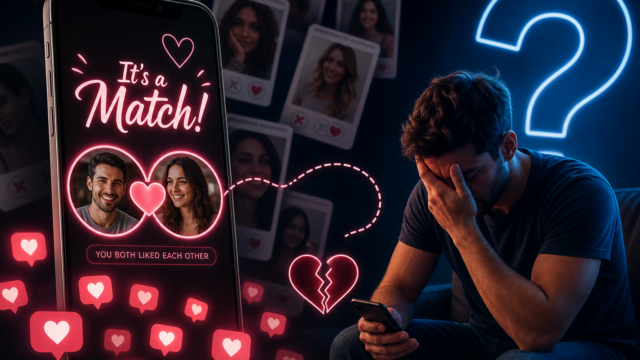
You’re up late, mindlessly scrolling through dating app profiles, when someone stops you in your tracks. Their photos look straight off a film set, the profile is charming, and every reply is quick and polished.
You get that buzz of excitement—then, just as fast, a little voice of doubt starts. Maybe you’re just being cautious, or maybe something about the whole thing feels too good to be true.
Does this person even exist? The last thing anyone wants is to fall for a scam or waste time on a fake.
This goes beyond avoiding embarrassment. I once got drawn in by a fake profile that seemed completely convincing—until I noticed what wasn’t there: real stories, a touch of awkwardness, the kind of quirks you can’t fake.
Learning to spot those tiny details changed the game for me before I invested my trust or time. Now, knowing How to Spot a Fake Dating Profile Before You Waste Your Time feels like a basic skill for anyone hoping to actually meet someone genuine online.
Five Key Warning Signs Every Online Dater Should Watch For
Spotting a fake dating profile doesn’t mean you have to become a detective or stay on edge all the time. You just need to know where to look. One reliable breakdown groups 20 warning signs into five main areas that anyone can check—no special skills required.
Start with the photos. Fake profiles often have flawless, professional-looking pictures—nothing candid or messy about them.
It’s not just that the person is attractive; the whole gallery looks staged. No cluttered backgrounds, no friends, nothing that feels spontaneous.
When you see a real profile, you’ll usually find a mix: quick selfies, casual shots, a glimpse into daily life, maybe even a photo with a pile of laundry in the background.
Now check the bio. If it reads like a fill-in-the-blank—“looking for my soulmate” or “love to laugh and travel”—but doesn’t mention anything personal, local, or specific, that’s a sign to be careful.
Most real profiles throw in something unique: a favorite pizza place, a joke about their city, a niche hobby. Fakes can’t keep up with those little details.
How someone chats reveals even more. If you get canned responses, over-the-top flattery right away (“No one’s ever made me feel like this”), or answers that don’t actually fit your questions, you’re probably talking to someone reading from a script. Scammers try to create instant emotional connections before you start to notice things don’t add up.
Watch out if the person wants to switch to WhatsApp, Telegram, or email right away. This is a classic move. Dating apps have safety features and reporting tools, so scammers try to get you into private chats as soon as possible.
If the topic of money comes up—even if it’s wrapped in a sad story or a promise to meet after you “help” with a gift card or transfer—stop immediately. No real relationship starts with a money request.
Important tip: If you spot two or more of these signs at once, your risk just went up. You don’t have to cut contact instantly, but it pays to pause and look more closely before getting invested.
Simple Tools Anyone Can Use to Check a Profile
You don’t have to be a tech expert to figure out if a profile is real. A few simple tools can make all the difference.
The easiest is reverse image search. Save a profile photo and upload it to Google Images or a similar site.
If you find the same face on different profiles, modeling pages, or in other countries, that’s a big warning sign. I once saw the same photo used on three separate accounts, each with different backstories—it took less than a minute to check and saved me weeks of wasted messages.
Linked Instagram or Spotify accounts can help too. Most dating apps let users connect social profiles to add credibility.
Look at their Instagram: does it have older posts, real comments from friends, tagged events? Or is it brand new, with barely any content and no interaction?
A genuine account shows history—posts from years ago, different locations, people talking in the comments.
Spotify is similar. Real accounts usually have a variety of playlists, believable followers, and music tastes that evolve over time. If you see only one playlist, made recently, or a bunch of fake-looking followers, be careful.
Some apps offer photo verification badges, which can be a minor comfort, but having a badge isn’t proof on its own. If the rest of the profile checks out, the badge is a nice bonus, but you shouldn’t rely on it alone.
Quick summary: Reverse image search and a look at linked social accounts can catch fakes fast. A few minutes of curiosity can save you from a lot of headaches later.
Why Fake Profiles Are So Common (And What the Stats Reveal)
It’s easy to think only careless people get fooled by fake profiles, but the numbers tell a different story. Around 10% of dating app profiles are outright fakes—so, one in ten. Over half (about 53%) contain at least some misleading info, whether it’s about age, job, or appearance.
There’s a reason for this. Making a profile is quick, free, and usually doesn’t require any proof.
Scammers know that every day, thousands of people are looking for connection and are ready to trust someone new. That’s why the number of fake profiles keeps growing.
Not every fake is run by a criminal. Sometimes, it’s just someone curious, seeing how much attention they’ll get.
But roughly 10% involve real scams: someone impersonating another person to trick or manipulate. This is identity theft—using stolen pictures and details to pretend to be someone else.
Why do so many people fudge the truth? Some are insecure, some want to look better, and some have bad intentions. There’s social pressure to seem more attractive, but online anonymity also makes it easier for scammers to run their schemes.
So what does this mean for you? Anyone using dating apps needs to stay sharp, question flawless profiles, and never feel awkward about asking questions or double-checking a detail.
Important tip: In a space where half the profiles are hiding something, trusting blindly is what gets people in trouble. Take a moment to investigate before you get emotionally or mentally involved.
How Social Media Links Can Help (or Hurt) Your Search
Connecting social media to dating apps can be a big help—or a trap—depending on what you see. The real trick is telling the difference between genuine details and staged profiles.
A real Instagram account shows a visible timeline: old photos, a mix of snapshots, tagged friends, and honest comments. You’ll spot birthdays, trips, blurry group shots—little slices of real life. Scammers, on the other hand, throw together new accounts fast: just a few photos, all posted within a week, with either fake or no comments.
Spotify works much the same way. Real users have multiple playlists, followers who seem like actual people, and music interests that change over months or years. When you see just one playlist, made last week, or zero evidence of interaction, it’s time to be suspicious.
I’ve seen “perfect” Instagram accounts where every comment was just “great pic!” or “so pretty!”—always from accounts that looked fake or inactive. That’s not absolute proof of a scam, but it’s a reason to pay closer attention.
Another thing to check: tagged photos with other people. Real profiles usually have pictures from parties, family dinners, or group outings. If every picture is a solo selfie with no sign of friends, it might be staged.
Quick summary: Real social accounts have a visible timeline, real interactions, and a bit of messiness. Brand new, all-posed, comment-free profiles deserve a second look.
What Official Warnings Actually Say About Staying Safe
Government agencies don’t mince words when it comes to dating app safety. The FBI, for example, plainly advises not to move conversations off the app too quickly. Most scams succeed once the chat leaves the platform’s safety net.
The Federal Trade Commission (FTC) is just as direct: anyone asking for money, cryptocurrency, gift cards, or a bank transfer—especially early on, but even later—is not acting in good faith. If someone you hardly know online brings up money, block and report them immediately.
It’s smart to double-check photos and profile info with an online search. If you spot the same picture on modeling sites, questionable ads, or other dating profiles, you’re looking at a scam.
Another trick: promising a real-life meetup, then pushing it off with constant excuses. Some claim to be stuck in another country or need money to visit. If you start hearing wild or dramatic stories, take a step back and check the facts.
Most of the time, simple steps are enough: keep conversations on the app, never send money, and check anything that feels odd before trusting someone. There’s nothing wrong with being careful; it’s actually the smart move.
Quick summary: The best official advice is simple: don’t send money, stick to the app, and check out anything that seems off before you trust someone new.
What To Do When You Spot a Red Flag
Finding out you’ve been chatting with a fake hurts more than just your pride. It’s normal to feel annoyed or embarrassed, but you don’t have to beat yourself up. Focus on what you can do next and look after your peace of mind.
Stop replying as soon as you feel suspicious. Don’t get into a debate or try to unmask the scammer—these people know how to twist the conversation.
If you feel safe, use the app’s report feature. Reporting helps keep others safe and strengthens the system against future scams.
If you gave out any private info or photos, change your passwords and check your accounts for anything unusual. The sooner you act, the better. In serious cases, consider getting professional advice.
Give yourself time to recover. Talk to friends, share your story, or take a break from dating apps for a few days to clear your head.
I’ve ended up laughing about some of the wild claims I’ve heard from fake profiles. A little distance helps you see things more clearly.
If you lost money, report it to the authorities as soon as possible. It might feel awkward, but quick action can keep further losses at bay.
Going forward, trust your instincts. Real people can be a little awkward, might take a while to reply, or have stories that are a bit messy.
Fakes usually come off as too polished and too fast. Your time and energy are worth protecting.
Have you ever come across a profile that didn’t feel right? What tipped you off? Sharing your experience might help someone else steer clear of the same trap.
Disclaimer: This article is for informational purposes only and does not replace professional guidance in the event of scams or suspected crimes.