You swipe right, feel that quick jolt of excitement when you read “It’s a match!” on your phone, and for a moment, you start to imagine the possibilities. Then reality sets in—now you have to say something, and suddenly the nerves kick in.
Should you just type “hey”? Will that sound boring?
Or worse, will you get ignored altogether? I’ve spent more time than I’d like to admit staring at the blinking cursor, debating whether to hit send or start over.
Getting a real conversation going after a match can feel impossible, but there’s much more strategy (and research) behind it than most people realize.
Why Most First Messages Get No Reply (Backed by Real Numbers)
If you’ve ever felt like your first messages just vanish into thin air, you’re not alone. A huge study of 19 million dating app messages found that half of first messages never get a response. So if you send out ten hopeful intros, odds are five will be ignored.
One big reason for this “ghosting” is that most people send the same tired greetings. The old standards—“Hey,” “Hi,” “How’s it going?”—flood inboxes every day.
And the data is brutal: those generic lines only get replies about 10–14% of the time. Out of a hundred “hey” messages, at least 86 get no answer at all.
The main problem is that everyone falls back on the same routine, and anyone active on dating apps has seen those openers dozens of times just that day.
But things change when you actually notice something from their profile—a favorite band, a pet, a travel photo. Messages that mention something specific about the other person see reply rates climb to nearly 45%.
That’s a huge jump. It sounds simple, but if you’ve ever waded through a feed of “hi” messages, you know it makes all the difference to receive one that actually feels personal.
In practice, showing genuine interest is the real secret. Generic messages make you look like you’d talk to anyone, while specific ones say, “I’m actually interested in you.” In a crowded inbox, that’s what gets you noticed.
Timing Matters: When to Reach Out
Most people don’t realize how much timing can affect your chances of getting a reply. The best window to send your first message is between one and twelve hours after matching.
If you can’t get to it right away, just don’t wait more than 24 hours. After a full day, your message is more likely to get buried under new matches and alerts.
From my experience using these apps, the most engaging conversations always started when someone messaged me soon after we matched. The details are still fresh, the excitement is there, and it feels more natural to jump into a chat. If I waited more than a day, I’d overthink what to say or lose interest, and my opener would feel forced.
I’ve also noticed that the spark of mutual curiosity fades quickly. Waiting too long can look like you’re not that interested, or worse, that you forgot about them. With so many people active, it’s easy for your message to get lost in the shuffle.
Important tip: Don’t fall into the trap of waiting for the “perfect time.” A simple, friendly message sent within 12 hours shows you’re genuinely interested and makes a reply much more likely. If you’re caught up with work, jot down a quick draft and send it as soon as you can.
What Works in a First Message (and Why)
Now that you know when to message, what should you actually write? The good news is you don’t need to be a creative genius. The most effective openers are short—between 10 and 30 words—mention something specific from their profile, and ask a simple question.
Here’s what the numbers show: asking a question doubles your chances of getting a reply compared to just making a statement. Instead of “I like hiking too,” try “What’s your favorite trail around here?” That little tweak invites the other person to share something about themselves. It makes the conversation flow naturally instead of stalling out.
Tone is just as important. Aim for friendly and curious, not stiff or overly formal.
You don’t have to be a comedian, just show you paid attention to what they shared and want to know more. It’s like chatting with someone at a party—you wouldn’t read from a script, you’d just pick up on something interesting.
Quick summary: Use this formula: notice a detail + give your reaction + ask an open-ended question. For example, “I saw you’re into jazz. Been to any good shows lately?” It’s easy, direct, and gives the person a smooth way to respond.
If you ever get stuck, think about how you’d strike up a conversation in real life. The point is to give them a reason to say more than just “good, you?”
Examples of Messages That Stand Out (and Ones That Flop)
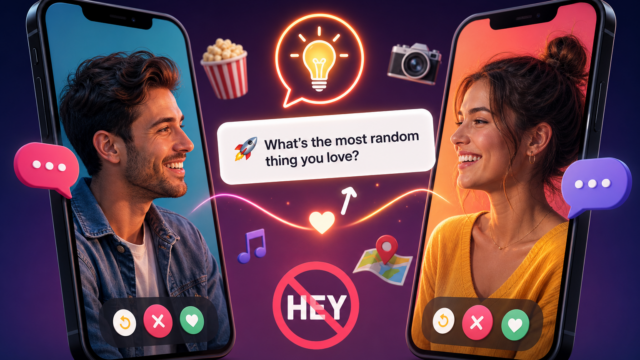
Let’s get into some real examples. Skip the “Hey” and “How are you?”—they’re instantly forgettable and never start a real conversation.
Instead, try something that only that person could receive. For example: “We matched, so I have to ask—was that festival in your photo this year?” That kind of message adds a little humor, shows you noticed their profile, and invites a reply.
Another reliable move is a compliment that isn’t about looks. Rather than “You’re gorgeous,” try “Your dog looks hilarious—what’s his name?” or “That playlist you mentioned is great! What’s your favorite song lately?” This kind of opener feels personal and gives them something to talk about, without sounding like a cliché.
If you want to change it up, try a playful emoji challenge: send three emojis that you think capture their personality (like 🎸🌄☕) and ask, “Would you keep these or swap one out?” It’s simple but memorable, and often gets a quick response.
Oddball questions can work too: “What’s the best gift you’ve ever gotten?” or “If you could travel anywhere tomorrow, where would you go?” These kinds of questions break the routine and show that you’re genuinely interested in who they are.
Important tip: If your message could be sent to anyone, rewrite it. Personalizing your opener is what turns a dead-end chat into something that might actually go somewhere.
I’ve tested out all these styles, and responses come much faster when the other person can see I took even half a minute to actually read their profile. That tiny bit of effort is enough to get past the autopilot most people use.
How to Actually Stand Out and Break the Ice
With so many people on dating apps, fading into the background is the quickest way to be ignored. The trick to making a strong first impression is to show real presence—let the other person know you’re talking to them, not just anyone. You don’t need a perfect pickup line, just some honest attention to detail.
I’ve seen for myself how a single, specific comment can shift the whole conversation. One time, I asked about a guitar in the background of someone’s photo—were they a musician, or just a fan?
That question turned into a chat about bands, concerts, and even future travel plans. What started as a small detail became a bridge to a real connection.
The real advantage isn’t coming up with something clever—it’s taking an extra minute to look through their photos or bio. Noticing a book they love, a city they visited, or even the emojis they use sends the message that they’re not just another profile in your feed.
That’s how you turn a dating app from a “catalog of faces” into a place for real conversation.
The stats back this up: openers that mention something from the profile get about a 45% response rate, while generic messages like “hey” or “how’s your day?” only get 10–14%. That difference isn’t luck—it’s about giving a little more attention than most people do.
And honestly, the chats you get from these openers are usually more fun, because the conversation flows from something real.
Ready to Change Up Your Approach?
Starting a conversation on a dating app is always a bit awkward, but now you’ve got solid data and real-life examples that actually work. Next time you get a match, try messaging within the first few hours, mention something you noticed in their profile, and ask a question that’s easy to answer.
I’ve had plenty of silent chats and missed connections, but the best talks always started when I took a moment to get out of autopilot. How about you—what’s the most memorable first message you’ve ever sent or received, and what happened next?
Disclaimer: The advice in this article is based on personal experience and general research. It does not replace professional guidance for relationships or dating.