You finally matched with someone new on a dating app. Your heart speeds up, and for a second, you think—maybe this could turn into something real.
But then you’re staring at the chat window, suddenly blank. Typing “hey” feels pointless, and everything else sounds awkward.
If you’ve ever hesitated between playing it safe or trying to stand out, you’re in good company. Most people feel that weird pressure to make a good first impression, worried about being ignored or lost in the shuffle.
It’s even tougher when you do send that “hi” or “what’s up?” and get nothing back. The person either disappears, leaves you on read, or sends a flat “hey” in return.
Sometimes it really feels like there’s a secret formula for starting good conversations on dating apps, and everyone else has figured it out. But the truth is, you don’t need wild jokes, and you definitely don’t need to become a pickup line machine.
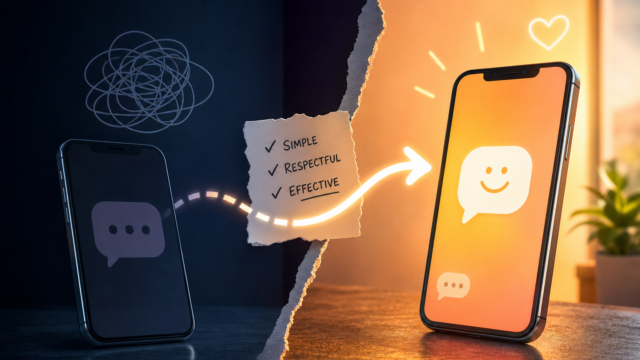
There’s a simple approach that makes your first message way more likely to get noticed—and anyone can learn it.
Why “Hey” Rarely Gets a Response on Dating Apps
When nerves kick in, it’s easy to fall back on a quick “hey,” “hi,” or “how are you?” You hope the other person will pick up the slack. But generic openers almost never work.
On dating apps, messages like that get a reply less than 10% of the time. So if you send out ten “hey”s, you might get one answer—if you’re lucky.
Here’s the problem: everyone’s inbox is full of the same old greetings. For the person on the other end, “hi” doesn’t stand out, doesn’t show any real interest, and doesn’t give them anything to say in return. There’s no hook, so the other person has to invent a topic from scratch.
With so many people trying to get attention on dating apps, flat greetings just get lost in the crowd. Most of those chats die before they even get started. If you want to look like you actually care or paid attention, “hey” does the opposite—it makes it clear you didn’t bother reading their profile or thinking of something unique.
From what I’ve seen, sending the same old greeting just makes you blend into the background. If you want a reply, it takes a tiny bit more effort—but it’s so much easier than people think.
The Real Way to Get Replies: Mention Something From Their Profile
Everything shifts when you show you actually read their profile. Profiles are full of details: travel pictures, random hobbies, funny bios, quirky facts, pets with odd names. Each one is a free ticket to start a real conversation—just pick something and mention it.
When your first message points out something specific from their profile, you’re way more likely to get a reply—sometimes double or triple the usual odds. Instead of blending in, you show you’re genuinely curious. The other person feels like more than just another swipe, and it’s clear you picked them for a reason.
I still remember the first time I swapped a “hi” for a question about someone’s profile. It was night and day.
Replies came faster, and the chat had more energy. For instance, I once saw a hiking photo and asked, “That trail looks incredible! Where was it?” Within minutes, we were swapping stories and travel recommendations.
Dica importante: You don’t have to be a genius with words. Just show you’re trying to know them beyond the basics. That alone changes the whole mood.
This approach also helps keep the chat from stalling, because you kick things off with a real topic.
Writing a First Message That Works: Be Short, Be Specific, Be Curious
A lot of people think they need to impress with a long story or some clever joke. Actually, the best first message is short—one or two lines—focused on something real from their profile, ending with a clear question.
You don’t need a long intro or a list of questions. Just one is enough.
Scan their profile for anything that stands out: a photo, a favorite book, a hobby, a pet. Use that for your opener.
Then ask a simple, specific question that’s easy to answer. If there’s a cooking photo: “I see you love to cook! What’s your favorite thing to make?” If there’s a music mention: “You play guitar? Is there a song you always love playing?”
Skip the long explanations or tricky questions. The simpler and more focused, the easier for them to reply. And don’t load your first message with several questions—it can feel like an interrogation.
When I switched to sending shorter, more direct messages, my response rate went up, and the chats had better energy. The long, over-explained texts rarely led anywhere. A quick, to-the-point question works much better.
Resumo rápido: Spot something unique in their profile, comment on it, and ask one simple question. This formula is easy to use, no matter the app or the person.
Message Starters That Actually Work (With Real Examples)
Everyone hits a mental block sometimes, so it’s handy to have a few go-to templates you can customize. The key is always making it personal—never just copy and paste. Here are some examples that usually get real conversations started:
They all follow the same structure: a quick comment, then a simple question. It proves you actually read their profile and it gets people talking about what they like.
One time, I opened with “Your bookshelf is impressive—any must-reads you’d recommend?” and we ended up trading book suggestions and chatting about favorite authors. Another time, I mentioned a funny painting in a photo, and the person told me the story behind it. It made everything lighter and a lot more fun.
Dica importante: Don’t send the same opener to every match. Always tweak it—even if it’s just swapping out one detail. That little bit of effort changes how people respond.
The best part? This trick works for anyone, no matter the app or their interests.
Making the Move: When to Suggest Meeting Up
After you break the ice, lots of chats get stuck on small talk forever. The secret is not letting things drag—if the conversation’s going well, bring up a plan to meet after about five messages. This keeps things moving and stops the chat from losing momentum.
Some people worry asking to meet up too soon feels pushy. But if you wait too long, things almost always fizzle out.
The best move is to suggest something casual, zero pressure: “I’m really enjoying this—do you want to grab coffee this weekend?” or “You seem fun. Want to walk in the park sometime?”
Whenever I waited too long to ask someone out, chats would slow down and eventually stop. When I suggested a simple meetup earlier, things felt more natural and led to real dates.
Resumo rápido: The ideal time to suggest meeting is when the chat feels energetic, usually after a few messages. Don’t let it drag on, but don’t force it either—keep your invite easygoing and let them decide.
If you’re feeling nervous, try something like “Only if you feel like it…” That keeps the vibe relaxed.
The Right Timing: When to Message for Better Results
What you say matters, but so does when you say it. Sending your first message within 24 to 48 hours after matching gives you a much better shot at a reply. That’s when both people are still paying attention and interested.
Wait too long—like a few days—and your chances drop off fast. The other person might already be chatting with someone else, lost interest, or just forgotten the match. The sooner you message, the more natural it feels to start talking.
I’ve tested this myself: when I sent a message right after matching, I usually got a reply. If I waited a few days, even clever openers got ignored.
Reaching out while interest is still fresh always worked better. It’s not about looking desperate—it simply shows you’re present.
Dica importante: Try to send your first message within a day or two of matching. Good timing really boosts your odds.
If nerves kick in, remember: dating apps move fast. Acting quickly shows confidence, not impatience.
Standing Out With Voice Notes: When to Give Them a Try
Text can only show so much personality. If you want to stand out, sending a short voice note early on can make a huge difference. Just ten seconds is enough—a friendly message lets them hear your voice and makes things feel more real.
You don’t need a speech or perfect delivery. Just be yourself, mention something from their profile, maybe add a joke or a quick story.
For example: “Hey, I saw you’re into spicy food. I once tried a chili-eating contest and instantly regretted it—how spicy do you go?”
After I started trying voice notes, I noticed people replied faster and seemed more at ease. Some even said it took guts to send a voice message, and that it showed I was comfortable being myself.
Resumo rápido: If you’re up for it, send a voice note—keep it under 15 seconds, tie it to something from their profile, and just sound natural. Sometimes, that’s the spark that helps a real connection start.
If voice notes aren’t your thing, that’s totally okay—it’s just an extra option, especially with matches you’re excited about.
What’s Your Go-To Opener?
Everyone has their own way of breaking the ice on dating apps. Sometimes the simplest message is the one that gets things started.
What’s your favorite way to open a chat? Have you ever pointed out something from a profile and watched the conversation take off?
Share your best openers—or even your funniest fails—down below.
If you could get any message instead of just “hey,” what would it be? Try out these tips and let me know how it goes for you.
Disclaimer: This article offers general advice for chatting on dating apps and does not replace professional guidance in relationships.